Shenzhen Super Time Co., Ltd.

NEWS

Why Do Dive Watches Have Helium Escape Valves?

Click :
Update Time : 2026-01-17 23:23:19

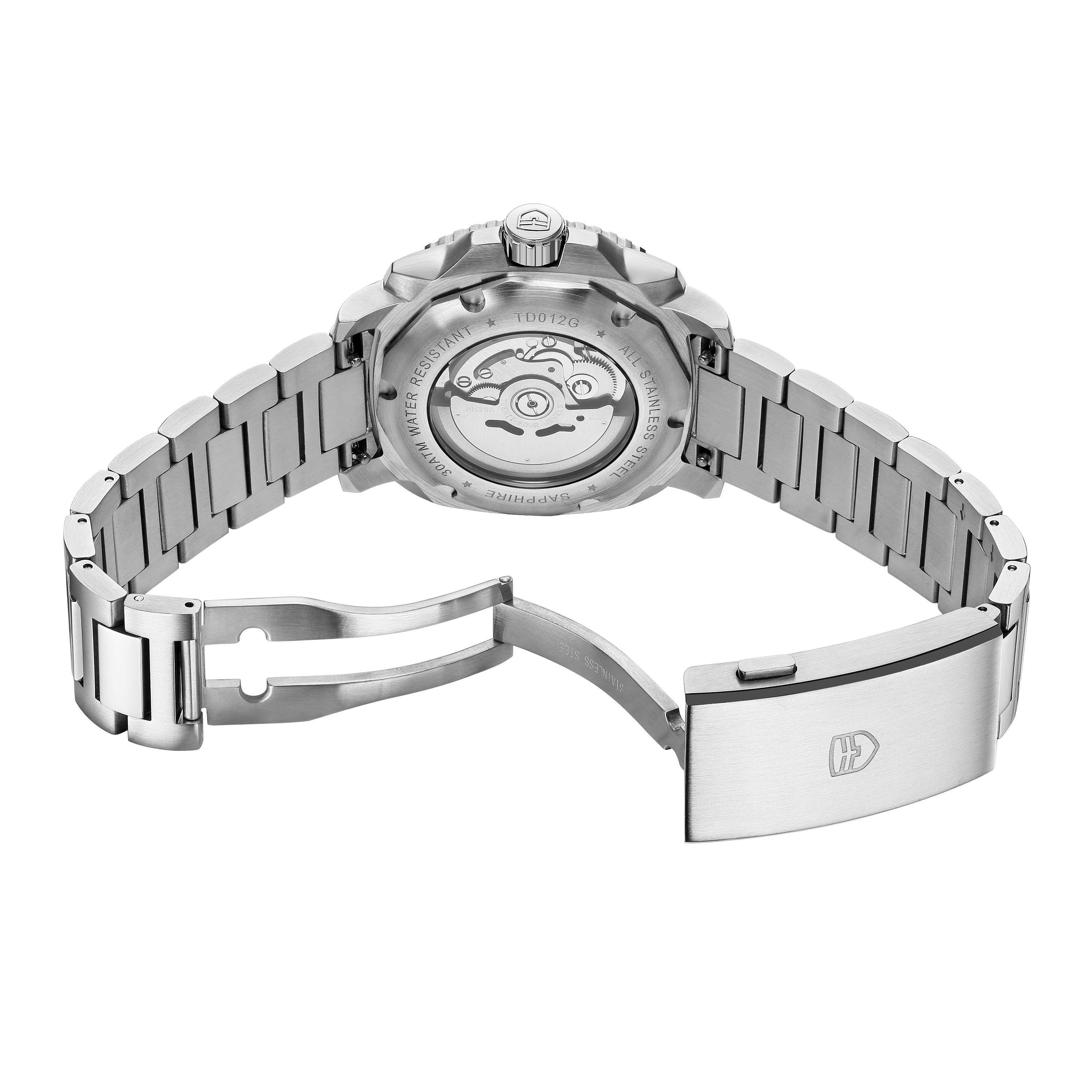
Why Do Dive Watches Have Helium Escape Valves?(图1)

Why Do Dive Watches Have Helium Escape Valves?

This is a highly specialized question! The helium escape valve (HEV) is a critical yet often misunderstood feature on top-tier professional dive watches. Its existence is solely to address the most extreme scenario in modern commercial diving—saturation diving.

In simple terms: The purpose of a helium escape valve is to allow tiny helium atoms that have seeped into the watch case during a dive to be rapidly expelled during the diver's decompression ascent, preventing a massive pressure differential from blowing the crystal off.
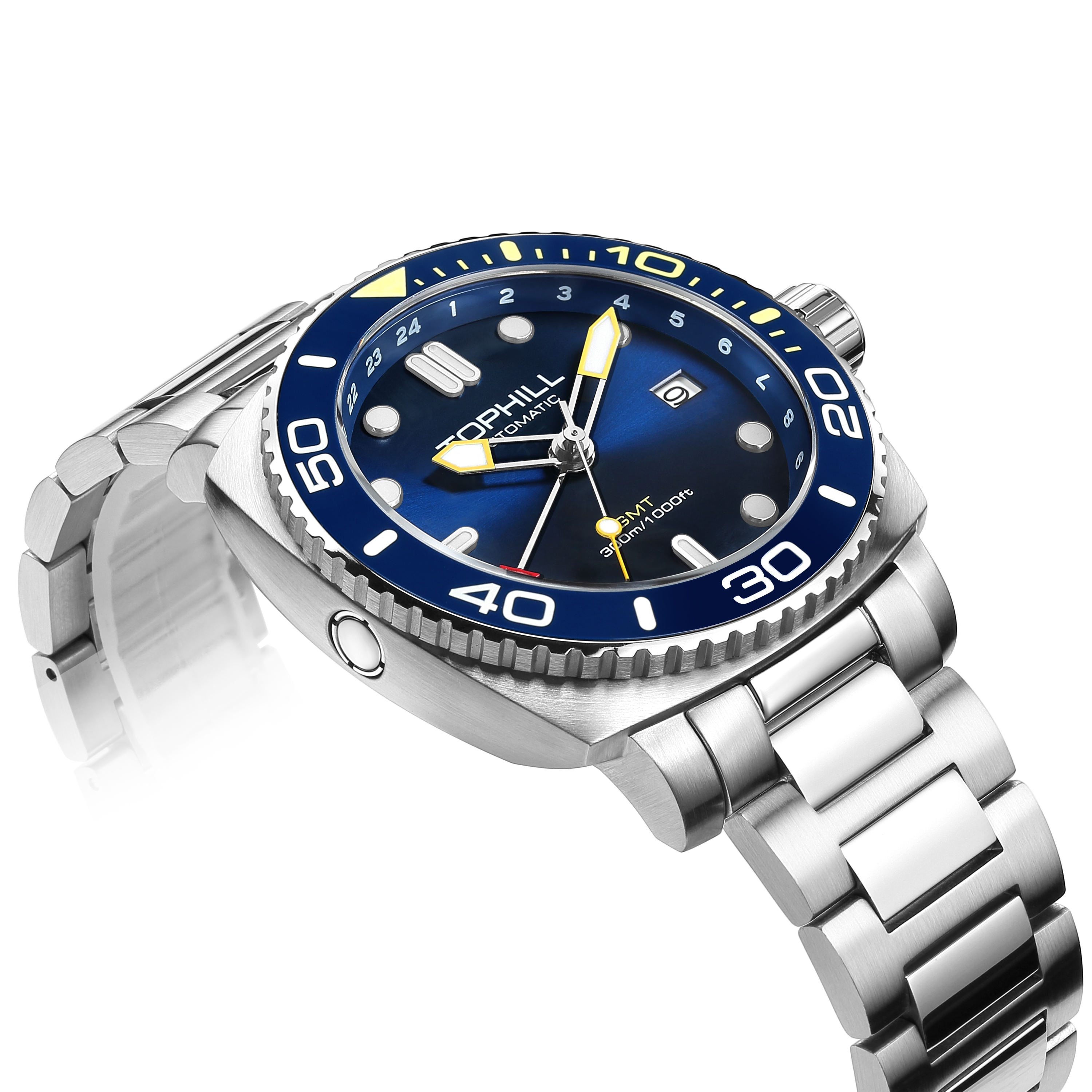
Why Do Dive Watches Have Helium Escape Valves?(图2)

Here is a detailed breakdown of the principle and process:

1. The Core Issue: The Property of Helium

Helium is the smallest and lightest inert gas molecule in nature. Under high pressure, it is extremely permeable and can pass through seemingly sealed rubber gaskets and even microscopic gaps in metal.

2. The Application Scenario: Saturation Diving

Saturation diving is a technique used for prolonged deep-sea operations (e.g., pipeline repair, scientific research). Divers live in high-pressure habitats on the seafloor (like diving bells or seabed stations), breathing a helium-oxygen gas mix (helium replaces nitrogen to avoid nitrogen narcosis at depth).

  • In this environment, divers live and work continuously for days      or even weeks, with their body tissues becoming fully saturated with the      high-pressure gases.
  • Their dive watches are also exposed to this high-pressure      helium-rich environment.

3. The Dangerous Process: Ascent and Pressure Differential

  • Helium Infiltration: During      prolonged stays in the high-pressure chamber, tiny helium molecules slowly      permeate into the interior of the watch until the internal      pressure equalizes with the external chamber pressure.
  • Decompression Ascent: When the      operation ends, divers begin a lengthy decompression process (which can      take days). They are transferred to a deck decompression chamber where      pressure is gradually reduced.
  • Pressure Differential Formation: The      key is that helium escapes from the watch much slower than the      external pressure decreases.
    • The external pressure on the watch drops rapidly.
    • The interior of the watch still contains high-pressure helium.
    • This creates a significant positive pressure       differential (internal pressure much greater than external       pressure).
  • Explosion Risk: This pressure      differential is enough to blow the weakest part of the watch—usually      the crystal—off like a cork, or even cause the entire case to      rupture. This is known as a "watch explosion."

4. The Solution: The Helium Escape Valve

The helium escape valve is essentially a one-way pressure release valve.

  • Normally: It remains      completely sealed, ensuring water resistance.
  • During Decompression Ascent: When      the internal pressure exceeds the external pressure by a certain threshold      (often just a few atmospheres), the spring inside the valve is compressed      by the internal gas, opening the valve to allow the high-pressure helium      to vent rapidly, instantly equalizing the pressure and      protecting the watch.
  • Automatic vs. Manual:
    • Automatic HEV (e.g., Rolex       Sea-Dweller): Opens and closes automatically when the pressure threshold       is reached.
    • Manual HEV (e.g., Omega       Seamaster Planet Ocean): Requires the diver to manually unscrew the valve       crown before ascent and screw it back in after decompression. It's more       direct and reliable but depends on user operation.

    Why Do Dive Watches Have Helium Escape Valves?(图3)

Important Clarifications and Summary

  1. Not a Required Feature: For      99% of recreational divers (using SCUBA tanks, shorter dive times), a      helium escape valve is completely unnecessary. Their watches      are not exposed to high-pressure helium environments long enough for      significant permeation to occur.
  2. Depth is Not the Deciding Factor: The      need for an HEV depends on exposure to high-pressure helium      environments, not just dive depth. A 300m watch used for saturation      diving needs one; a 1000m watch used only for recreational diving does      not.
  3. Symbol of Professional Pedigree: In      horology, featuring a helium escape valve is the ultimate mark that a      watch is engineered for the most demanding professional underwater      work, representing the peak of manufacturing prowess and technical      complexity.

In one sentence: The helium escape valve is a "pressure relief port" for saturation divers, specifically designed to prevent the watch from exploding due to pressure imbalance during decompression, and it is the ultimate embodiment of a professional diving tool's attributes.


Why Do Dive Watches Have Helium Escape Valves?(图4)

Tags: Dive Watches diving watch shenzhen watch factory watches mechanical watches

Pre:
Next: none
Related articles
Read More >>
Why Do Dive Watches Have Helium Escape V Why Do Dive Watches Have Helium Escape V
17.01.2026
Why Do Dive Watches Have Helium Escape Valves?This is a highly specialized question! The helium esca...
<strong>SeaGull ST19 Movement: History and Desig</strong> SeaGull ST19 Movement: History and Desig
17.01.2026
Sea-Gull ST19 Movement: History and DesignThe Sea-Gull ST19 movement is a highly significant and leg...
What Makes a High-Performance Sports Qua What Makes a High-Performance Sports Qua
14.01.2026
Discover the sports quartz watch for running that beats the competition. Explore top features and du...
Quartz Watch vs Mechanical Watch: Which Quartz Watch vs Mechanical Watch: Which
14.01.2026
Compare quartz watch vs mechanical watch movements. Discover pros, cons, and accuracy tips. Choose a...

Super Time